In November, about thirty university and high-school students from across Serbia attended a four-day workshop program aimed at developing their debating skills.
The participants were part of the twelfth generation of the European School of Debate, organized by the European House and the academic debate network Open Communication, with the support of the EU Delegation to Serbia.
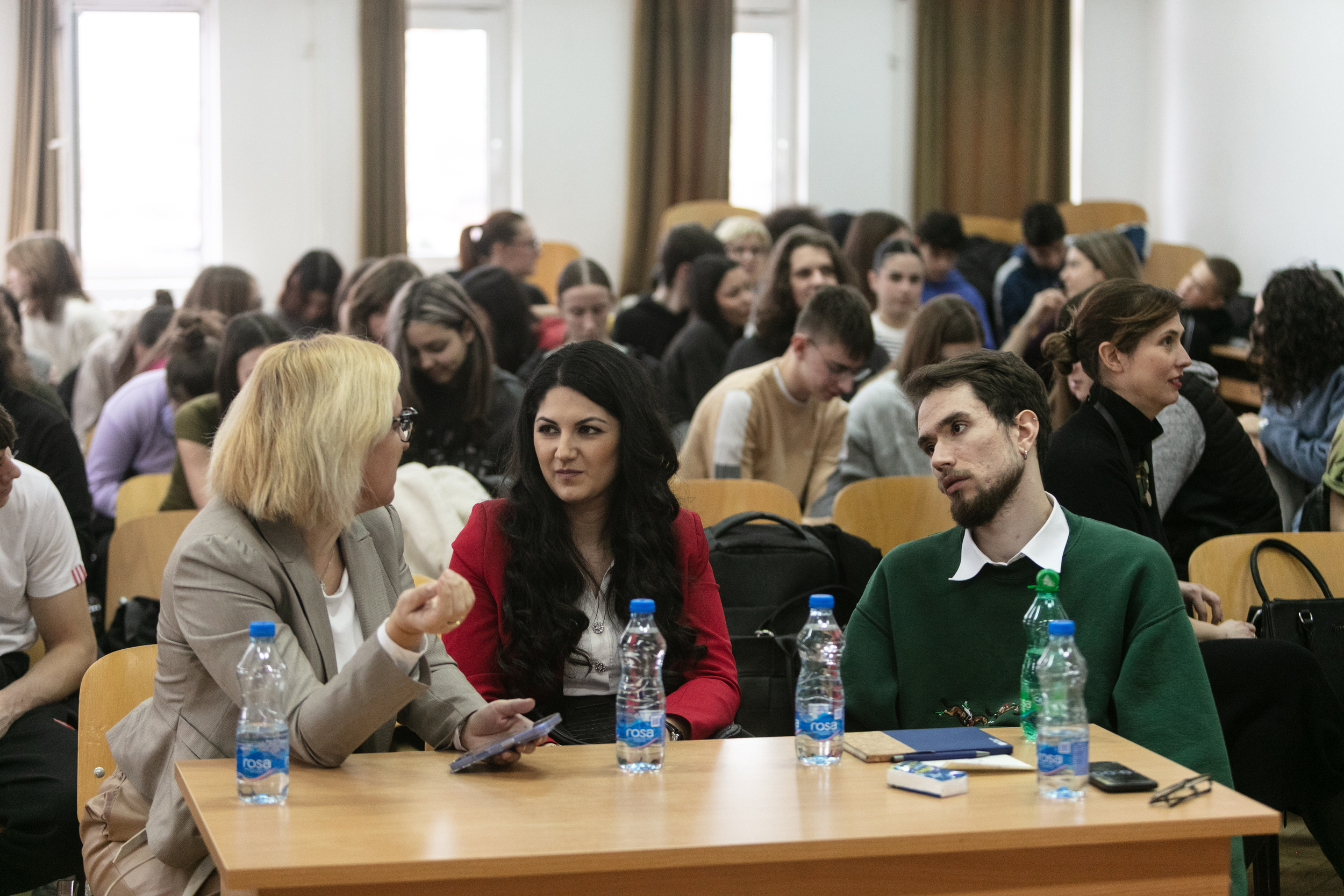
Six of them presented their newly acquired skills at the “Svetozar Marković” Gymnasium in Niš, engaging in a British Parliamentary–style debate on the motion: “This house believes that generative artificial intelligence poses a greater threat than benefit to individuals and institutions.”
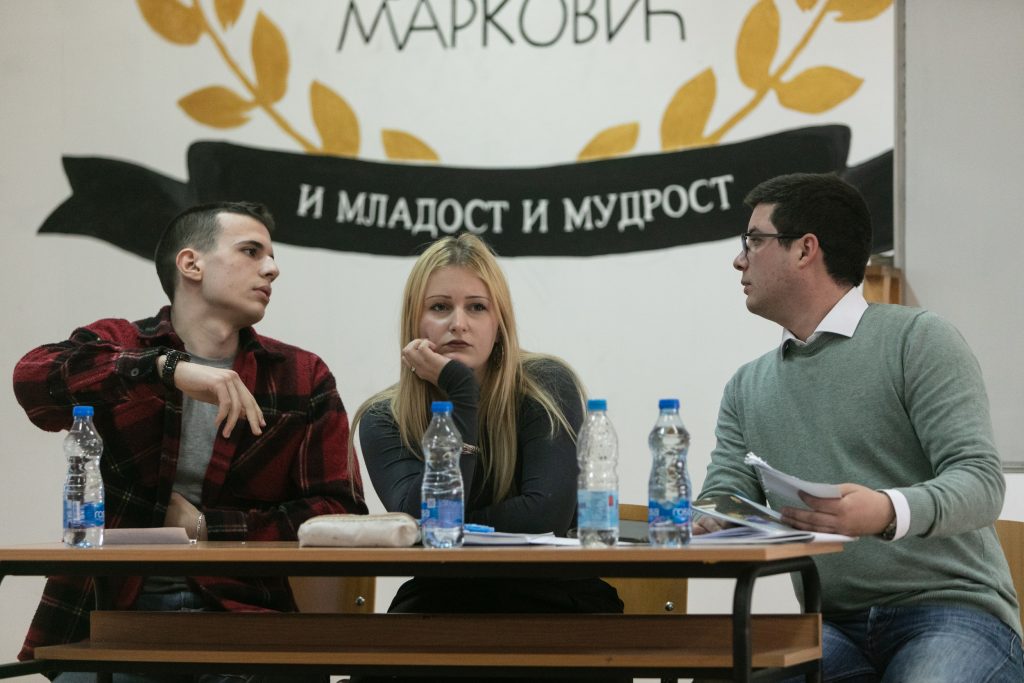
One of the participants, Lenka Ranđelović, had the opportunity to debate in her own school, the “Svetozar Marković” Gymnasium in Niš, where she served as the government leader defending the position that artificial intelligence poses significant threats. Reflecting on her team’s victory, Ranđelović commented in the spirit of parliamentary debate:
“The side my team represented was somewhat easier, because our task was to highlight the flaws of artificial intelligence. We based our arguments on its environmental impact, the misuse of personal data, and the potential for creating disinformation and deepfake content,” Ranđelović said.
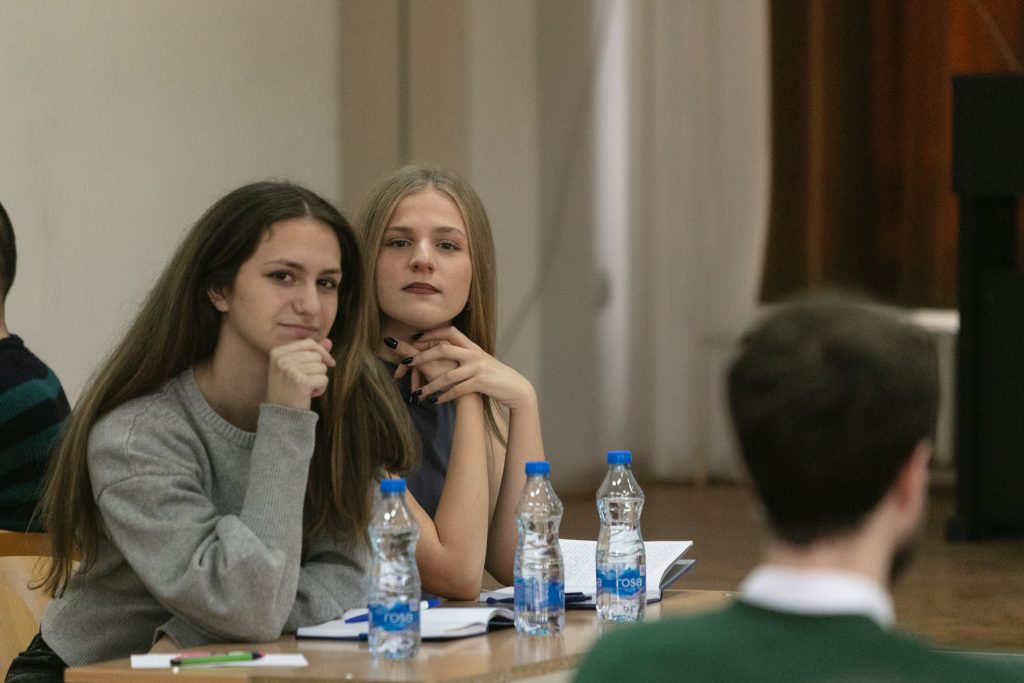
Sofija Obradović from the “Bora Stanković” Gymnasium in Niš had a somewhat more challenging task. As a member of the opposition bench, she argued in favor of positions she does not personally support in everyday life.
“I encountered this challenge already during the training, and it helped me better understand different sides of the same story or problem. Through this kind of argumentation we strengthen our character and broaden our horizons, opening ourselves to new perspectives,” she said.
For Sofija, this was her first experience with debating. She decided to apply out of a desire to work on her personal development in communication and public speaking, and to overcome stage fright.
A demanding task fell to the panel of judges in Niš, which consisted of Dr. Maja Nastić, professor at the Faculty of Law in Niš; Sara Nemat, Serbian language and literature teacher at the “Svetozar Marković” Gymnasium; and Mihajlo Babić, debate coach from Open Communication.
The debate held in Niš was one of more than 50 organized in over 30 cities across Serbia, with the participation of more than 1,000 young people.
European School of Debate is a long-running educational project implemented by the European House and the academic debate network Open Communication, with support from the Delegation of the European Union to the Republic of Serbia.
The project aims to equip high-school and university students with knowledge and skills in debating, argumentation, critical thinking, and public speaking, while also introducing them to the European Union, its institutions, and the process of European integration.