“To be free is not merely to cast off one’s chains, but to live in a way that respects and enhances the freedom of others,” said Nelson Mandela.
On the day the world marks International Human Rights Day, these words resonate with the global need for greater empathy, understanding, and respect for oneself and for others.
Human rights are not a luxury. They are not “a topic for intellectuals” or “an agenda of certain organizations.” They are the framework without which a society stagnates. This is why the European Union, from its founding to today, places individual rights and the creation of an environment for free personal and professional development at the core of its principles.
Freedom—encompassing all human rights—forms the foundation of development, primarily the development of the individual, because if the individual is not free, neither can the society in which they live be free.
What does freedom in creation look like when its foundation is instinct rather than calculation?
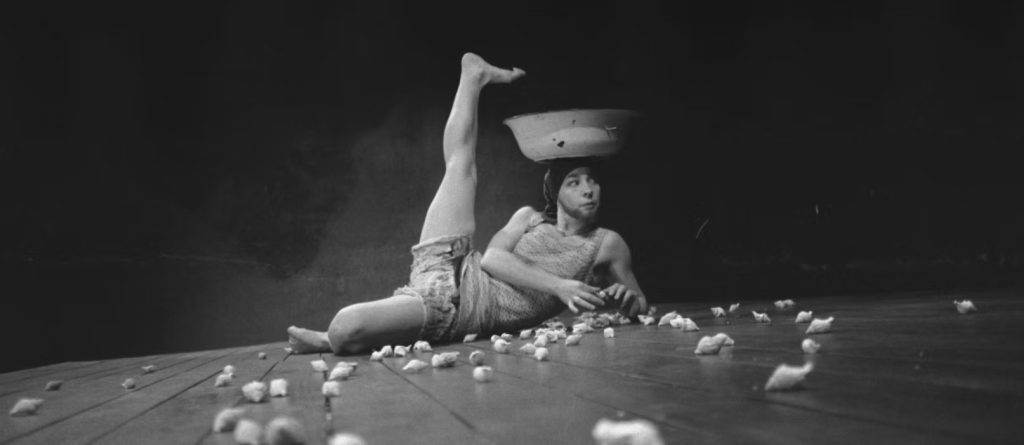
Photo from the performance – Eloge du poil’ by Jeanne Mordoj
We spoke about freedom with Jeanne Mordoj, a French performance artist and participant in “Open Studio Europe: Women Artists in Dialogue,” organized in November by the European House Novi Sad as part of the global campaign “16 Days of Activism Against Gender-Based Violence.”
Working on the boundary between theater, cabaret, and circus arts, Mordoj cultivates a unique approach to transforming the body and material, inviting audiences to recognize beauty in the strange and to confront their own insecurities, thereby creating space for freedom.
Her performances arise in atypical spaces, often with minimal production conditions, building an atmosphere in which material, voice, and body are equally important. This tendency toward experimentation and working with “liberating constraints” is recognizable in titles such as Forêts, L’Errance est Humaine, and Éloge du poil.
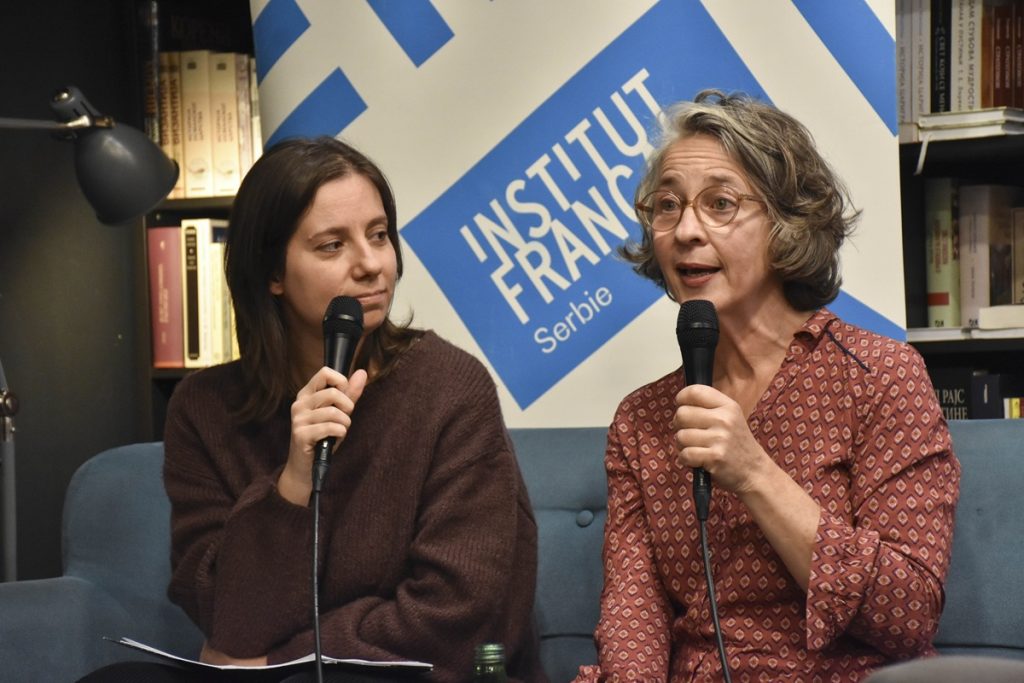
Jeanne Mordoj (right), photo/A.MISKOV
How do you experience freedom in creation?
Mordoj: I would say that I observe it through the origin of the creative impulse—whether it comes from a kind of necessity, from an instinctive need to move in one direction or another, which does not have to be logical or trendy. Without calculation. We are never completely free, and limitation can sometimes be a source of creativity, directing us toward paths we otherwise would never have chosen.
What does freedom mean to you?
Mordoj: Trusting my creative process, whose mechanisms I do not fully understand (and it’s better that way). Accepting uncertainty—not knowing in advance what shape or meaning the work will take. Discovering that gradually. Trusting that process.
What motivates you? What is the main idea that runs through most of your works?
Mordoj: Creating the conditions for making art, openness to the world, accessibility, nourishing the imagination through reading, film, exhibitions, introspection, research. What runs through my work over time, and what I particularly nurture, is transformation, strangeness, intimacy, humor.
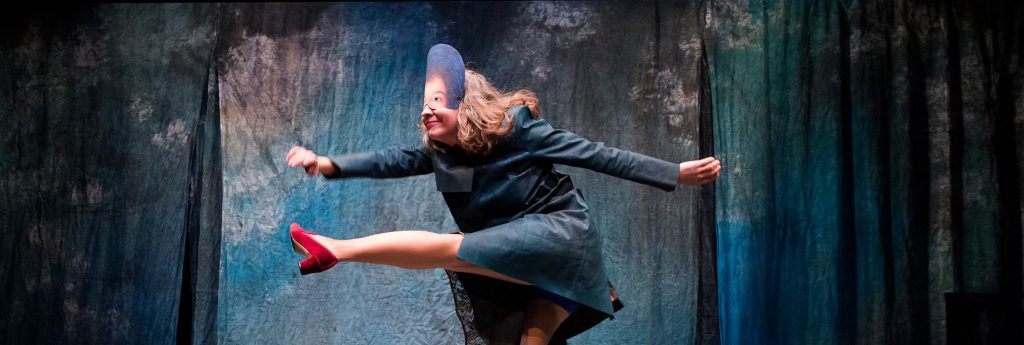
Photo from performance ‘Lerrance est humaine’ by Jeanne Mordoj
To what extent do the artist’s position and stability influence creativity and creation, and in what way?
Mordoj: I can speak only from my own experience. I’ve always had relative financial stability, which allowed me time to create, dream, explore. However, when I’m in a certain state of urgency, that additionally stimulates my creativity. If I am sometimes “too” comfortable, I can lose myself. A certain fragility feeds creativity. It is an unstable balance. I believe limitations can be creative as long as they are not too great. It depends on one’s ability to adapt and on the need to create at all costs.
When and under what circumstances have you felt most free to create, and which project would you highlight as one that emerged from that freedom?
Mordoj: Surprisingly, I felt most free when I had the greatest spatial and production constraints. For example, in my latest performance staged in apartments, the constraints were very significant, yet during the creative process I felt extremely free. Perhaps also because I did not have to perform in that piece myself. When I wore a beard for the performance Éloge du poil, I also felt a great sense of freedom thanks to that mask—freedom in language and in movement.
Jeanne Mordoj reminds us that freedom in art is not a grand gesture but a practice: constantly testing boundaries, embracing uncertainty, and turning limitations into material for play.
Her repertoire shows that the least comfortable conditions are often the most creative: from performances in caravans to shows in abandoned clubs, every restriction becomes a training ground for transformation. As she herself says, believing in the process—even when we do not fully understand it—proves to be a vital element of creative courage.