Serbia has a unique opportunity to define a new phase of development based on sustainability, innovation, a highly qualified workforce, and a stable business environment — and CEBAC stands ready to support this process and help remove obstacles so that the full potential of the Serbian economy can be unlocked.
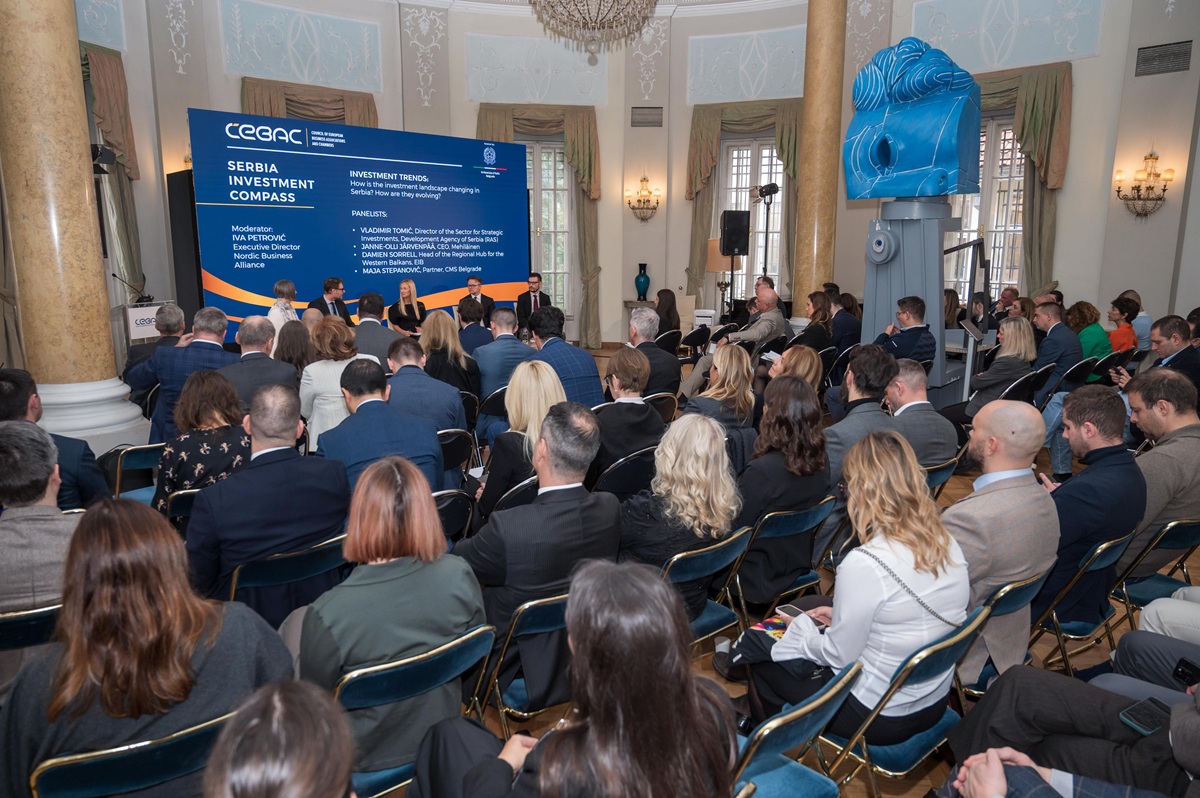
This was the key message of a conference organized by the Council of European Business Associations and Chambers — CEBAC — held on December 4 at the Italian Embassy in Belgrade.
The aim of the conference, which gathered numerous officials and senior representatives of Serbian and European institutions, along with members of the diplomatic and business communities, business leaders, and financial institutions, was to provide a comprehensive overview of the key factors shaping today’s investment climate in Serbia.
The program is focused on analyzing current and future investment trends, presenting new financial instruments, examining the role of innovation as a driver of growth and competitiveness, and identifying the main opportunities and challenges for attracting investment in the years ahead.
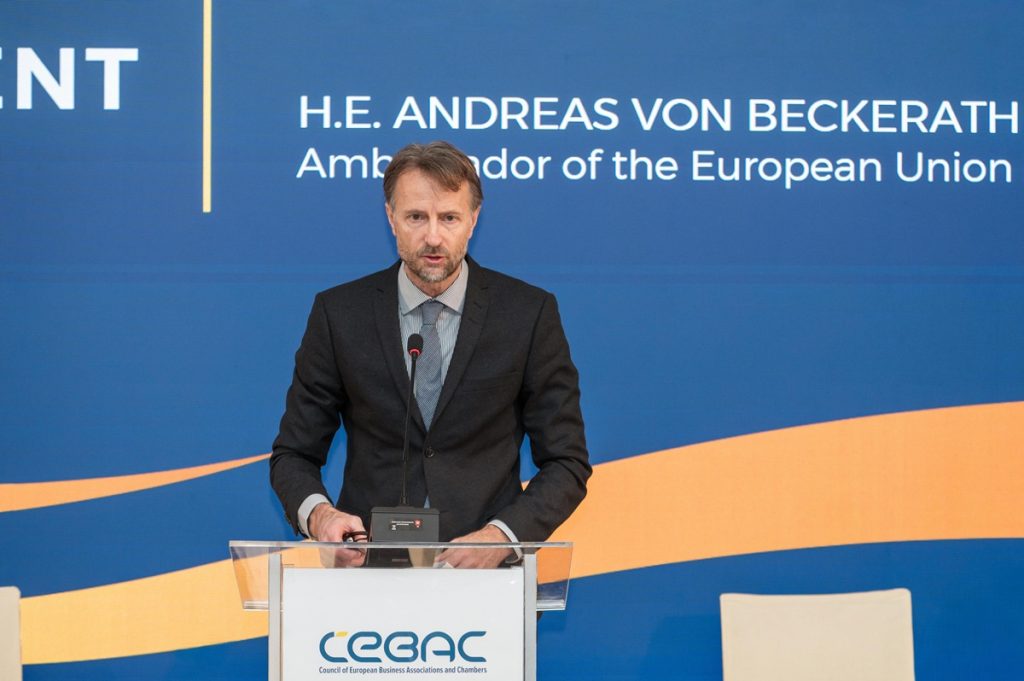
EU Ambassador to Serbia, Andreas von Beckerath, emphasized in his address at the conference that “the future of Serbia and the Western Balkans lies in the European Union — and the time for investment, reforms, and growth is now.”
“EU Delegation in Serbia stands ready to support CEBAC, the young business council, in strengthening its role as a platform for dialogue on economic policy and for coordinating issues related to the business environment, EU investment, and the implementation of EU standards in Serbia. EU is here to move forward together with Serbia — as its largest investor, its biggest trading partner, and its closest economic ally,” Beckerath stated.
Participants agreed that Serbia has the potential to define a new stage of development — one in which innovation, sustainability, technological progress, and a stable business environment become the key drivers of growth.
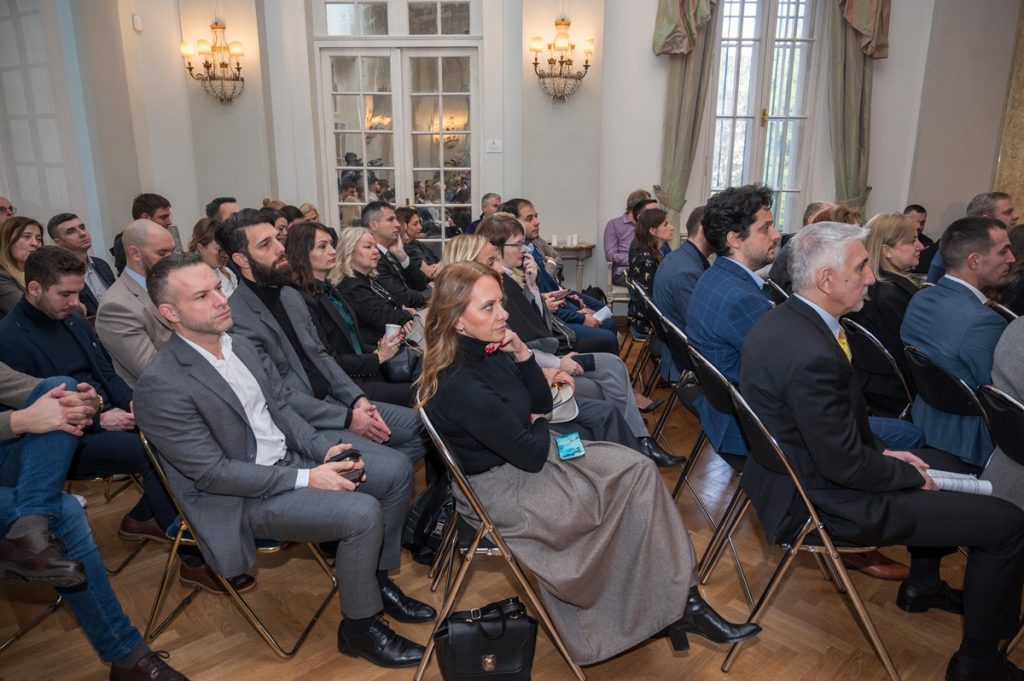
“To fully realize this potential, it is essential to improve the regulatory framework, modernize the approach to supporting innovation and technology, accelerate the reform of vocational education, and create policies that keep pace with rapidly evolving economic opportunities. CEBAC remains committed to this process,” said Silvija Rakić, Secretary General of CEBAC.
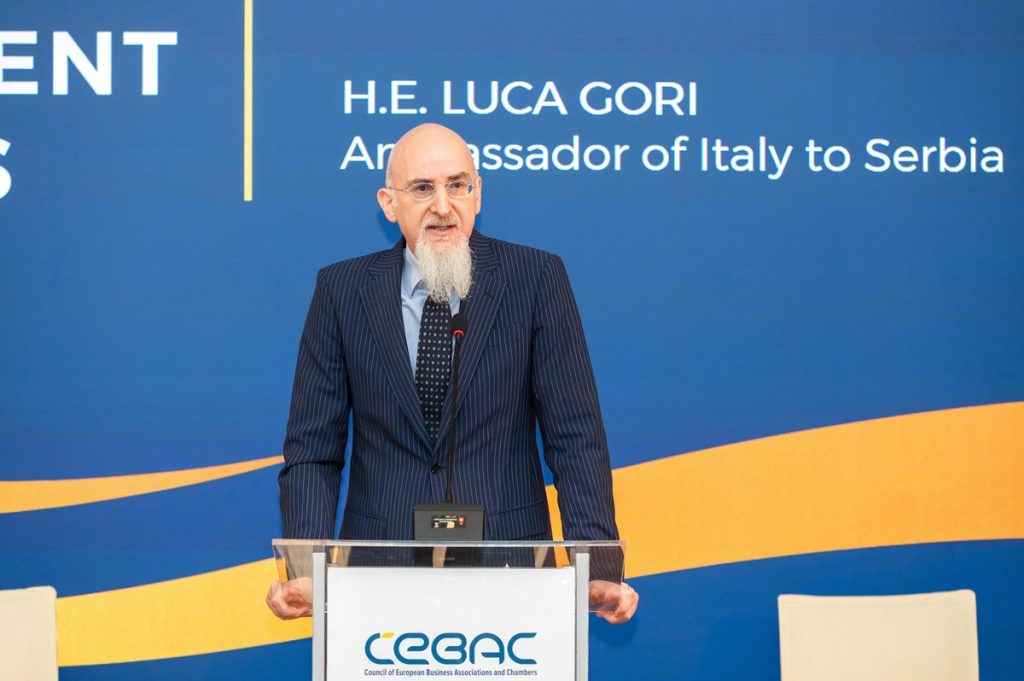
Luca Gori, the Italian Ambassador to Serbia, noted that Italy’s presence in the country is both historic and significant.
“With nearly €4 billion in investments, around 1,200 registered Italian companies, Italy as Serbia’s third-largest trading partner, and trade exchange that reached €3.5 billion by the end of September 2025 (an 8% increase), while in 2024 it amounted to €4.5 billion — the current phase the country is going through represents both a challenge and an opportunity. Italy stands by its companies, supporting them with a wide range of instruments and initiatives,” Ambassador Gori stated.
Particular attention was drawn to an analysis of economic trends presented by Pasquale De Mico, Head of the Sector for European Integration and Economy at the EU Delegation in Serbia.
During the three panel discussions, participants emphasized that Serbia has an opportunity to develop an economy grounded in innovation, sustainability, and technological progress.
Panelists highlighted that diversifying financial instruments — such as minibonds and green bonds — can stimulate business growth, noting that innovation has become an essential requirement.