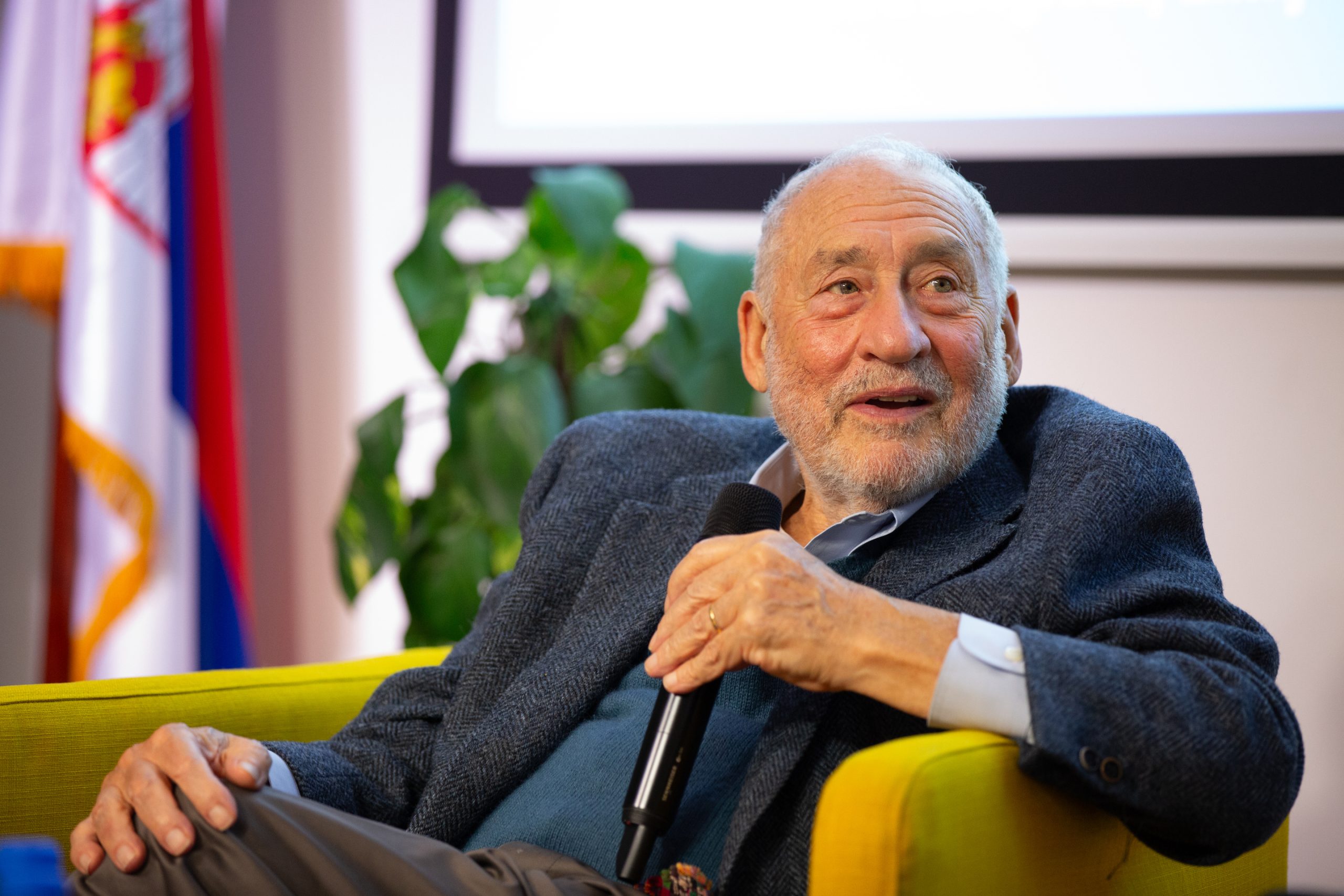
The question of Europe’s sovereignty and its current position in relations with the United States, the Russian Federation, China and other actors were at the heart of a discussion on Europe with Columbia University Professor Joseph Stiglitz.
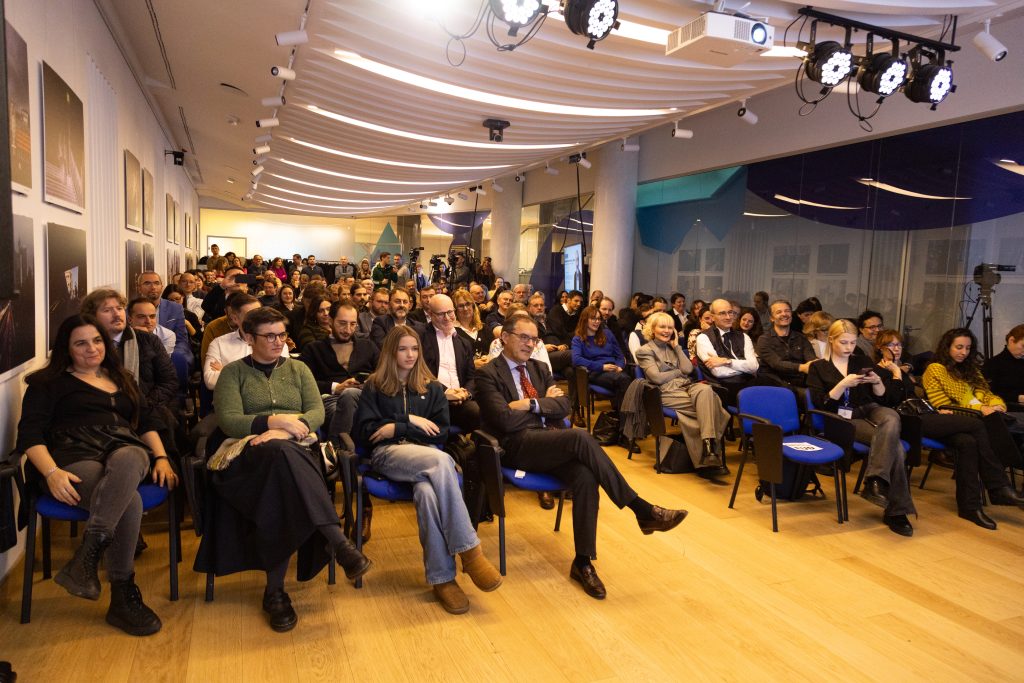
The event, hosted at Europe House, attracted strong public interest, as Professor Stiglitz is one of the world’s most influential economists and a Nobel Prize laureate.
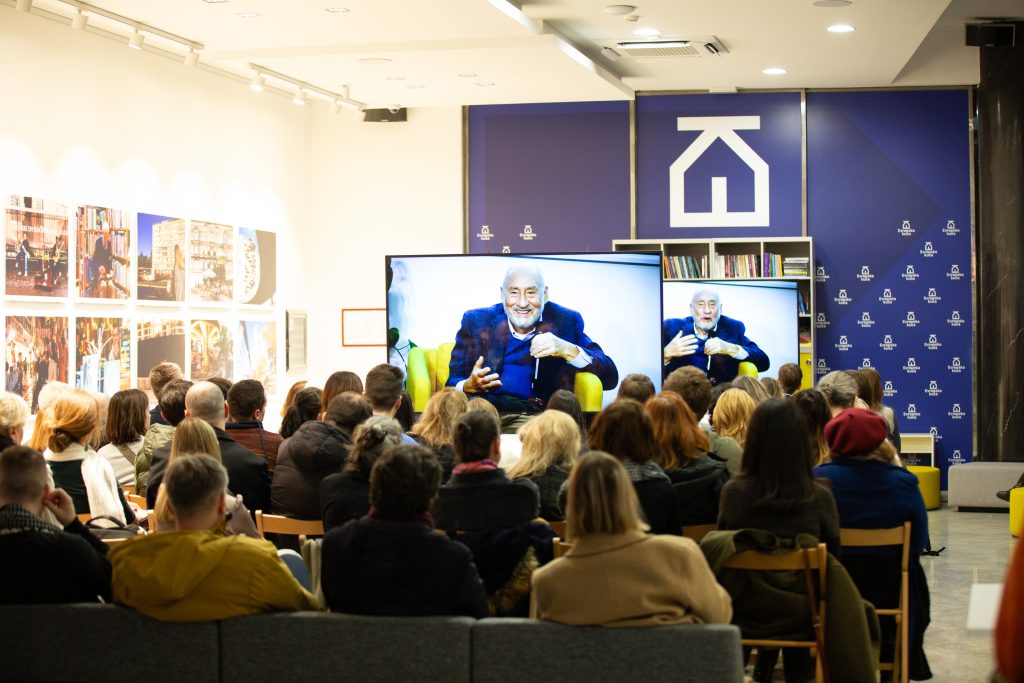
“Looking at the world today, Europe is the last bastion of democracy and human rights. I cannot stress enough how important the European project is at this moment. Unfortunately, you cannot rely on the United States – things could go either way. And there are also countries in Europe that are not fully democratic. Still, the European Union as a whole is the foundation of democracy today and the major supporter of human rights. This also goes back to your earlier question about the differences between the US and Europe – in Europe there is a far more developed and lively public debate about what it means to be a democracy and what the role of human rights is. Here, I see much more active engagement with these topics,” Stiglitz believes.
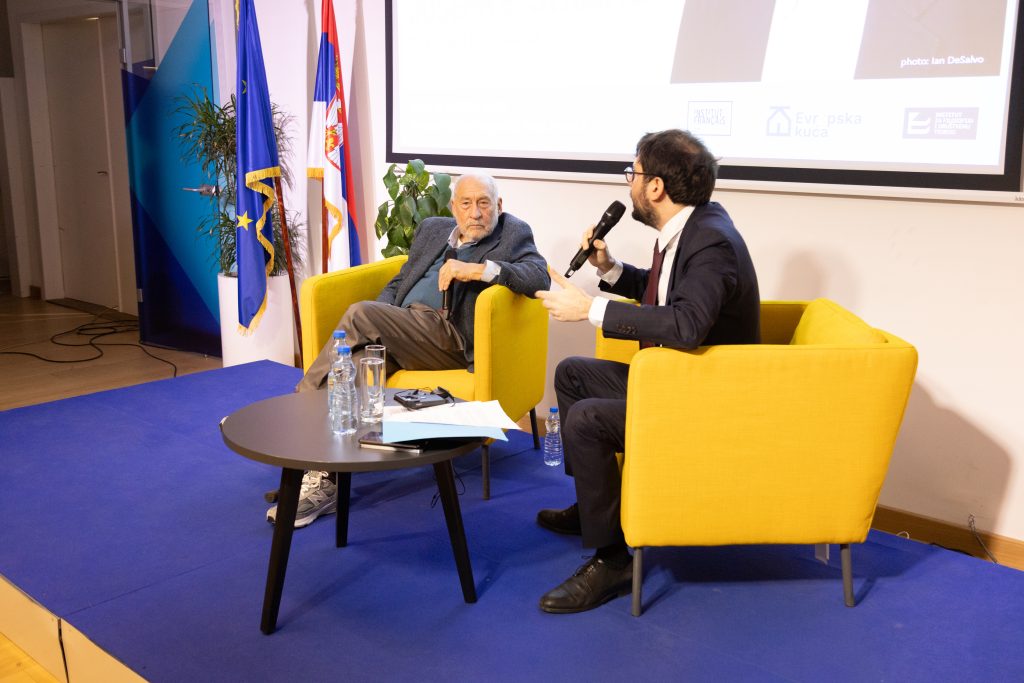
The Columbia University professor also believes that Europe has recognised the importance of relying on itself in the fields of defence and technology, where, in his words, it still depends heavily on the United States. The Nobel Prize winner adds that the continent has talented people and strong potential, and that this is why economic policies are very important – so that countries’ actions support their success and encourage them to stay in European countries.
Another very important topic in recent years’ geopolitical considerations has been the use of modern technologies, above all artificial intelligence.
“I think it is very important for Europe to keep in mind that it has to establish the right regulatory framework. When there is a good regulatory framework, critics often say: ‘America innovates, China imitates, and Europe regulates,’ as if to suggest that Europe discourages innovation. I put it differently: Europe is encouraging the right kind of regulation and the right kind of innovation. Innovation that increases the well-being of society is the kind of innovation you want, not innovation that destroys our society. By directing innovation in the right way, you will have more of the right kind of innovation,” Stiglitz says.
Before the discussion with one of the world’s most respected economists, the audience were welcomed by the European Union Ambassador to Serbia, Andreas von Beckerath, and the French Ambassador to Serbia, Florence Ferrari.
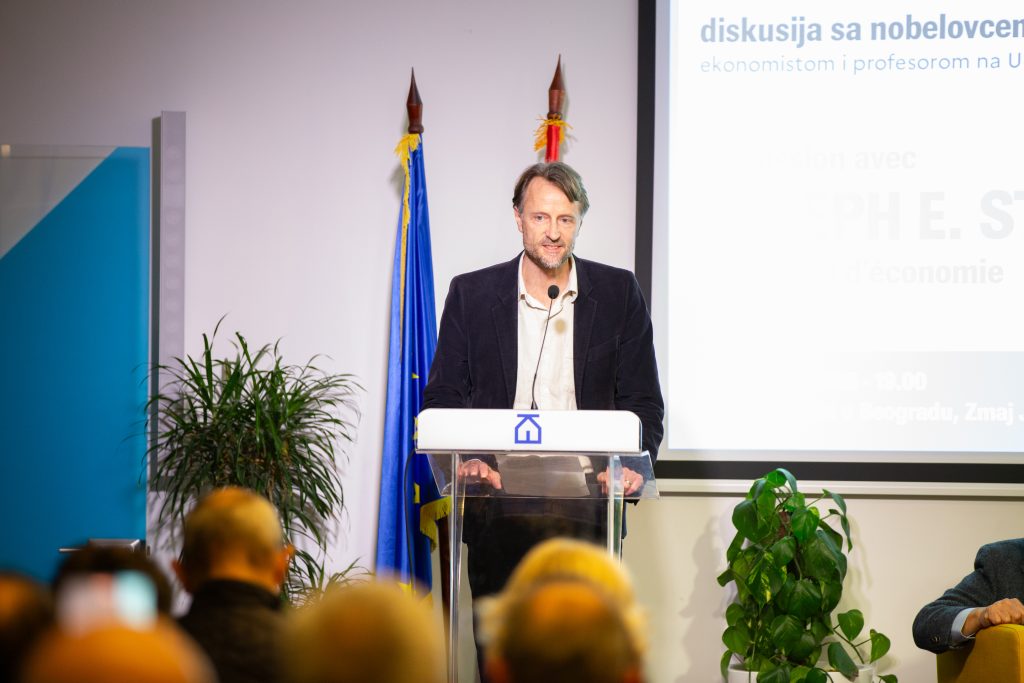
“Having followed you over the past years, my understanding is that you genuinely appreciate the EU’s contribution to peace and democracy on our continent. At the same time, you are somewhat sceptical about the Eurozone – its construction and its governance. I think that makes you the perfect guest, because what we most need at Europe House is to debate, to discuss, and to test our different views against each other,” Ambassador von Beckerath said.
“Born in the United States, you have a unique relationship with our continent, where you have studied, taught and worked. We are eagerly looking forward to hearing from you – as a great intellectual, a Nobel Prize winner and former Chief Economist of the World Bank – as you tell us about your Europe. I am confident that this speech will have a very special resonance here,” Ambassador Ferrari said.
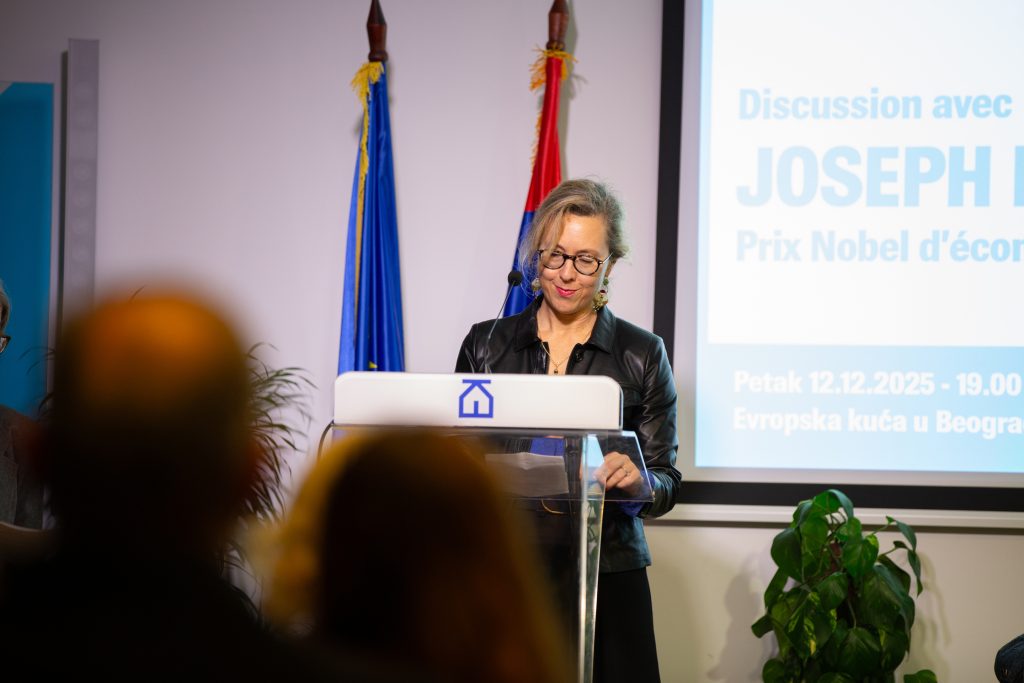
The event “Joseph Stiglitz on Europe” was organised at the initiative of the French Institute in Serbia, and the Institute’s Director, Amos Reichman, moderated the discussion. Professor Stiglitz is in Belgrade at the invitation of the Institute for Philosophy and Social Theory.