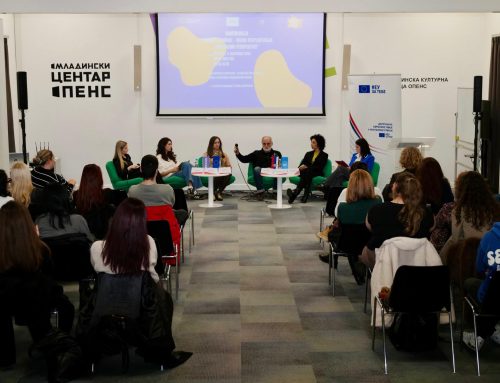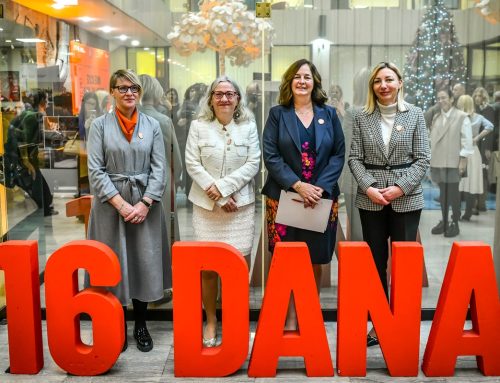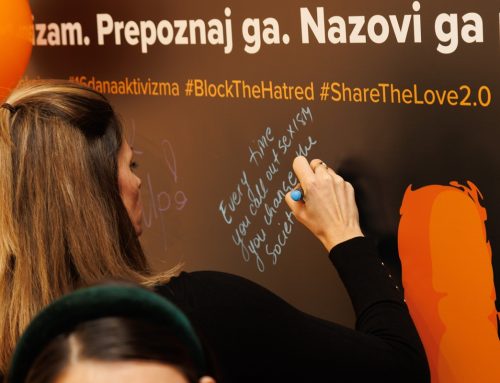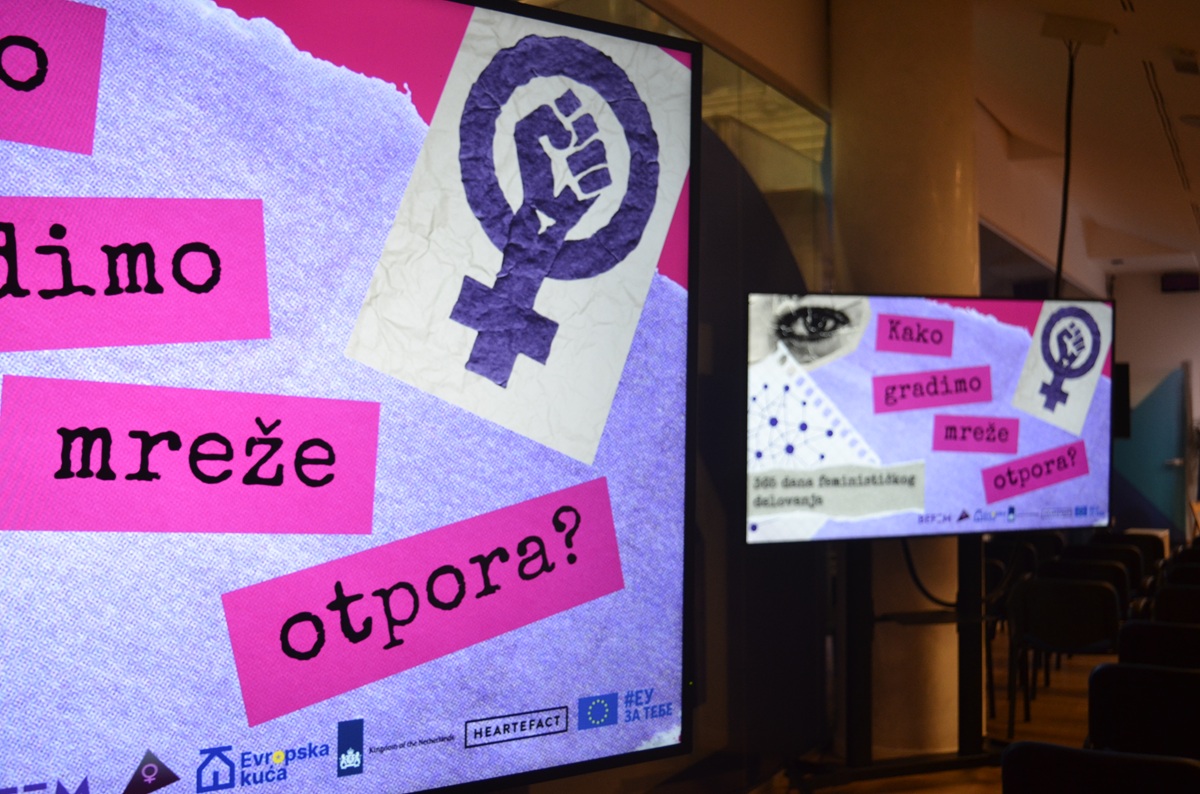
As part of the global “16 Days of Activism” campaign, the Europe House in Belgrade brought together women active in all spheres of public life and engaged in promoting women’s rights in the broadest sense. The event was supported by the Belgrade Feminist Center, BeFem.
This year’s campaign focused on digital violence, but given that women in Serbia simultaneously face physical, institutional, economic, and symbolic forms of violence, the organizers — together with BeFem — chose to approach the issue holistically. The program consisted of four segments, aiming to showcase what contemporary feminist resistance in Serbia looks like.
BeFem introduced participants to the event with a performance titled “Your Ticket for a Safe Ride – Next Stop: RESISTANCE”.
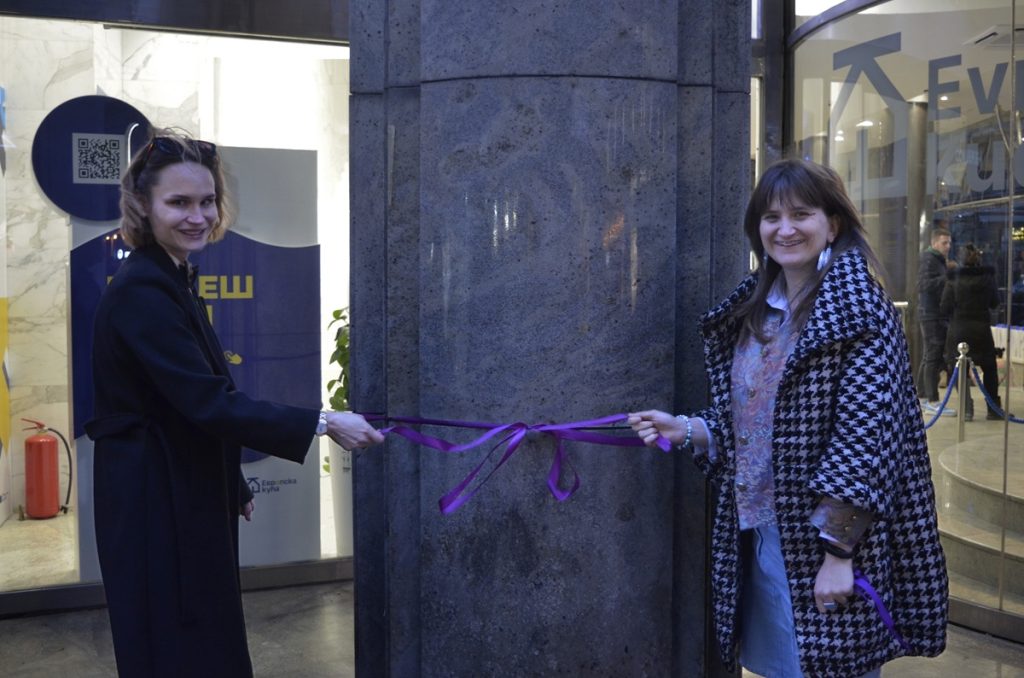
The informal initiative “(Don’t) Be Afraid of the Dark” staged an artistic-documentary performance on Knez Mihailova Street, where participants read authentic stories of women experiencing harassment on public transport. The performance concluded with the formation of a solidarity circle in front of the Europe House. The symbolic untying of a purple ribbon at the entrance marked both the official start of the event and the entry into a safe feminist space.
The event promoting women’s solidarity continued inside the Europe House with “Love at First Resistance – Feminist Speed Dating”, where participants had the chance to engage in interactive meetings with activists, journalists, artists, and members of women’s organizations.
Through brief conversations, visitors were introduced to concepts such as women’s activism, digital forms of resistance, and experiences in the fight against violence. This format encouraged participants to delve deeper into these topics, while local initiatives were further highlighted in the following segment, “Field, Camera, Resistance! – Feminist Cinema”.
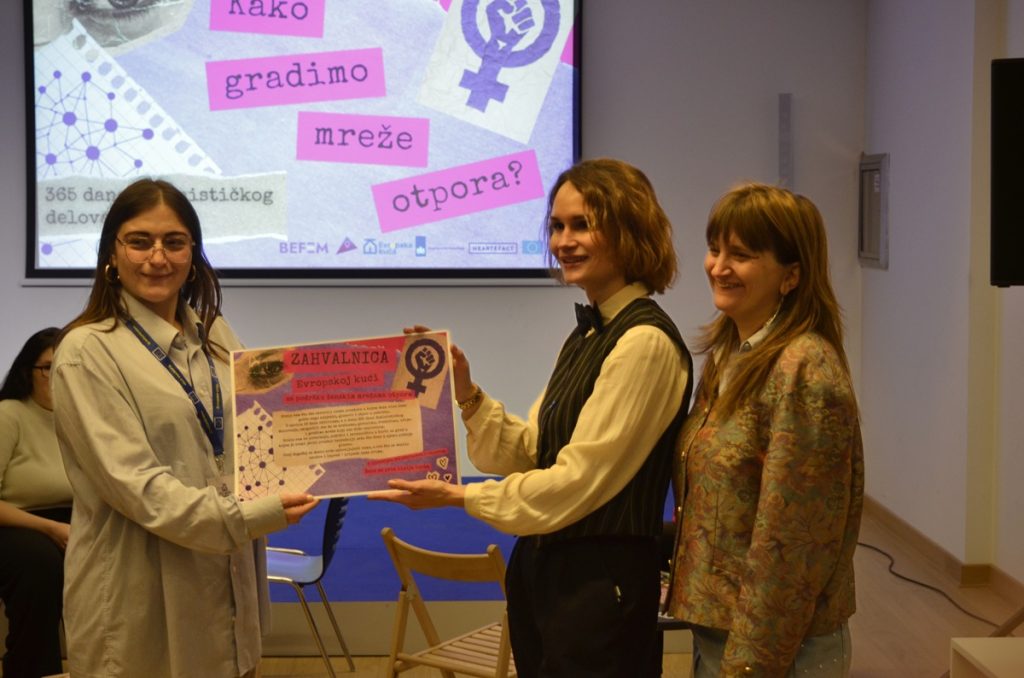
Through BeFem films from the series “Heroines from the Neighborhood” and other feminist video works, the audience could see that “violence in Serbia would not have been criminalized if it weren’t for women, for activists, for the collaboration between activists and female politicians,” as Milica Batričević from the BeFem Center noted.
After the film screening, participants and the audience had the opportunity to openly discuss their personal experiences, support networks, and the general challenges women face in everyday life in Serbia.
The event aimed to map women’s acts of resistance, initiatives, and the individuals who, 365 days a year, work to create safer environments for girls and women through art, activism, digital tools, community-building, and public testimony.