With the aim of enhancing regional and local connectivity, European Union has allocated €134 million for the modernization, reconstruction, and electrification of the Niš–Dimitrovgrad railway, a key route connecting Serbia and Bulgaria along Corridor 10. The financing package includes a €100 million loan from the European Investment Bank (EIB Global) and €34 million in EU grant funding.
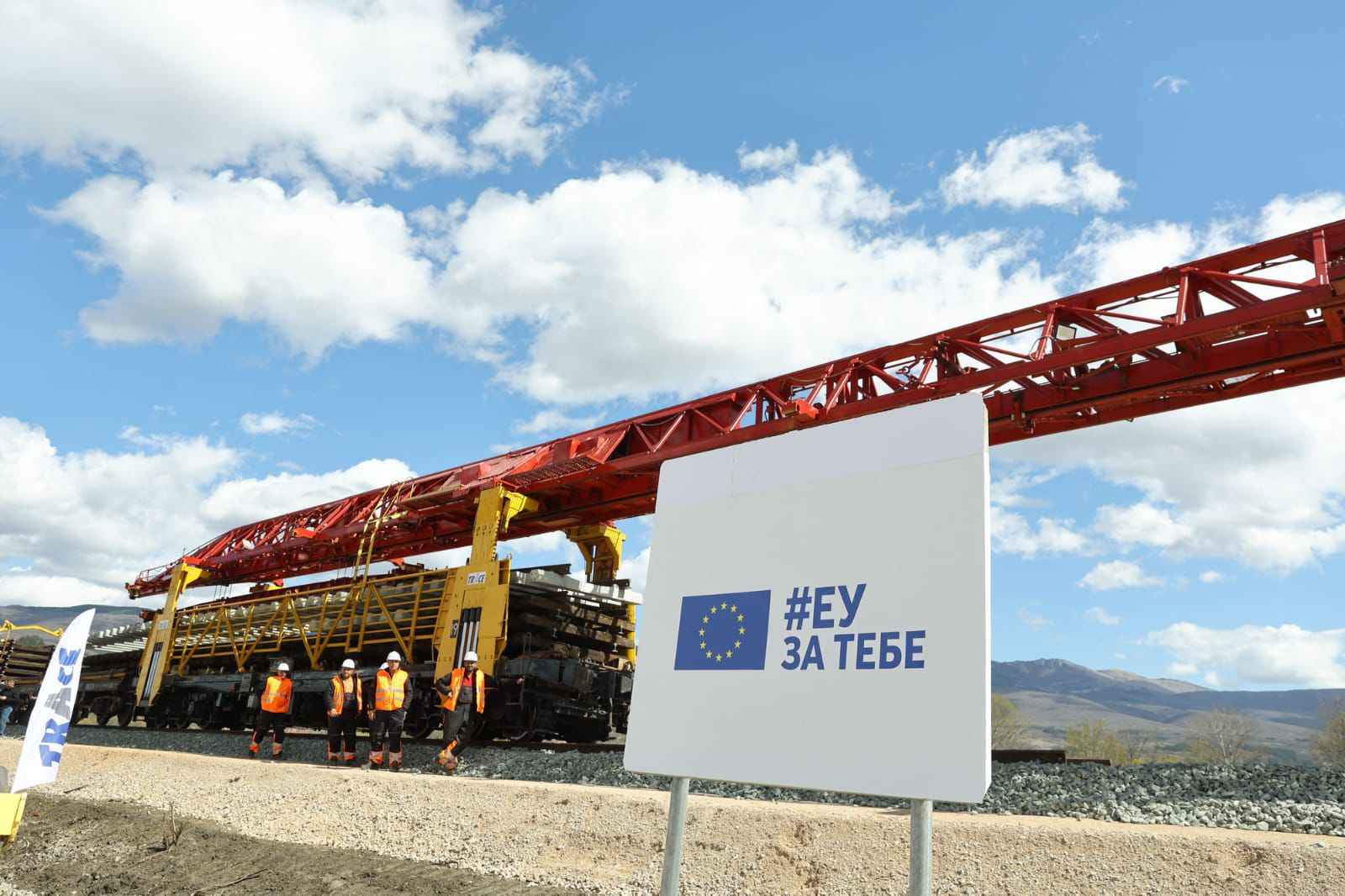
The funds will be directed towards modernizing the Sićevo–Dimitrovgrad railway section, electrifying the line, installing modern signaling systems along the entire Niš–Dimitrovgrad route, and constructing a railway bypass around Niš. These investments will improve capacity, safety, and reliability of rail transport while reducing traffic congestion in the city of Niš.
This project is part of a broader Serbian investment program for sustainable transport, implemented with strong support from the Team Europe initiative. The Niš–Dimitrovgrad railway is an integral part of Corridor 10, which belongs to the European Western Balkans–Eastern Mediterranean corridor, connecting Central European countries with major ports on the Adriatic and Eastern Mediterranean. These investments will further strengthen regional connectivity and bring long-term benefits to citizens and the economy across Serbia, emphasized the European Union Ambassador to Serbia, Andreas von Beckerath.
With the signing of new financial agreements, total EU support for this railway section has reached €342 million, including €234 million in EIB Global loans and €108 million in EU grant funding. The project is being implemented with significant technical support from the EIB through the JASPERS program and the Western Balkans Investment Framework, which included detailed preparation for the Niš railway bypass and assistance in implementing the Niš–Dimitrovgrad rail connection.

EIB Vice-President Robert de Grot highlighted that this project is crucial for regional connectivity and economic development. According to him, modernizing this railway, part of a key international transport network connecting Serbia with EU countries, will strengthen trade flows and accelerate economic growth.
The €34 million in EU grant funding, provided through the Western Balkans Investment Framework, is intended for the construction of the railway bypass around Niš. The project aims to reduce traffic congestion and improve overall transport functionality in the city through integrated planning in line with EU standards.
Serbian Finance Minister Siniša Mali emphasized that the reconstruction of the Niš–Dimitrovgrad railway is extremely important for the continued modernization of Serbia’s railway network. He noted the strategic significance of this line, as it is part of Corridor 10, forms a key connection between Serbia and Bulgaria, and carries large volumes of freight.
Modernization of this railway corridor will significantly increase train speeds—from an average of 50 km/h to a maximum of 120 km/h. Passenger habits are also expected to change, with the annual number of passengers rising from around 170,000 to approximately 550,000, and freight volumes increasing from 3.2 million to about 6.2 million tons per year.
Minister of Construction, Transport, and Infrastructure Aleksandra Sofronijević recalled that the implementation of the Niš–Dimitrovgrad project began at the end of 2023, thanks to the support of the European Union and the European Investment Bank.
Projects in Serbia’s transport sector funded by the EU aim to improve transport connectivity, thereby enhancing economic integration within the region and with the EU. Furthermore, EU efforts in the transport sector focus on market opening and the implementation of EU standards. Projects supported by the EU have significantly contributed to railway reform, the adoption of modern and cost-effective road infrastructure maintenance practices, and the introduction of a river information system to improve navigation conditions on Serbia’s inland waterways.